








On February 23, 1945, in the midst of one of the bloodiest battles of World War II, a photograph was taken that would become one of the most iconic images in American history: the raising of the U.S. flag atop Mount Suribachi during the Battle of Iwo Jima.
The battle for Iwo Jima had begun just four days earlier, on February 19. U.S. Marines faced fierce resistance from deeply entrenched Japanese forces commanded by General Tadamichi Kuribayashi. The island’s black volcanic sand, fortified bunkers, and vast underground tunnel systems turned every advance into a deadly struggle. Mount Suribachi, a 546-foot volcanic peak at the island’s southern tip, served as a key Japanese defensive stronghold and observation point.
By the morning of February 23, elements of the 28th Marine Regiment, 5th Marine Division had fought their way up the steep slopes of Suribachi. Around 10:30 a.m., a small American flag was raised on the summit. The sight electrified Marines fighting below and sailors offshore, who cheered and sounded their ship horns in response. It was a powerful morale boost, but it was not the moment that would be immortalized.
Later that day, commanders ordered a larger flag to be raised so it would be more visible across the island. As six Marines positioned the second flagpole, Associated Press photographer Joe Rosenthal captured the moment. The photograph showed five Marines and one Navy corpsman straining together to plant the flag in rocky ground. The image conveyed unity, determination, and sacrifice—without revealing faces or focusing on individuals.
The six men in the photograph were later identified as Sergeant Michael Strank, Corporal Harlon Block, Private First Class Franklin Sousley, Private First Class Ira Hayes, Private First Class Rene Gagnon, and Pharmacist’s Mate Second Class John Bradley. Tragically, three of them—Strank, Block, and Sousley—would be killed in action before the battle ended.
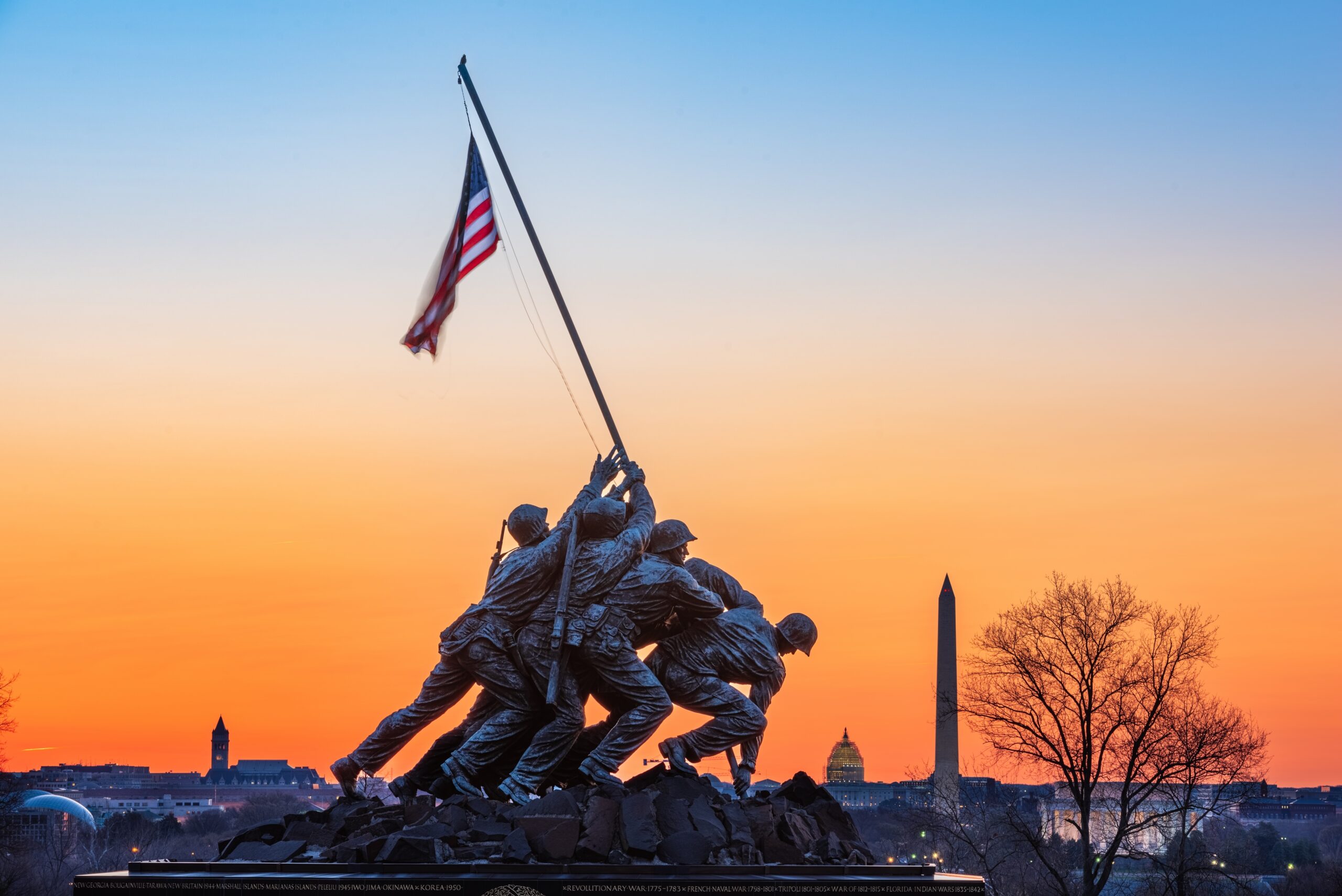
Rosenthal’s photograph quickly circulated worldwide and became a symbol of American resolve. It won the Pulitzer Prize later that year and was used to promote war bond drives that raised billions of dollars to support the war effort. The image also inspired the Marine Corps War Memorial in Arlington, Virginia, where the bronze sculpture mirrors the scene on Suribachi.
Despite the emotional power of the flag raising, the battle itself was far from over. Fighting on Iwo Jima would continue until March 26, costing nearly 7,000 American lives and more than 20,000 wounded. Of the roughly 21,000 Japanese defenders, almost all were killed.
February 23, 1945, stands as a day of symbolism amid immense sacrifice. The raising of the flag did not mark victory, but it embodied the perseverance and courage of those who fought. Decades later, the image remains a defining representation of unity under pressure and the heavy cost of war.












What do you think?
It is nice to know your opinion. Leave a comment.