



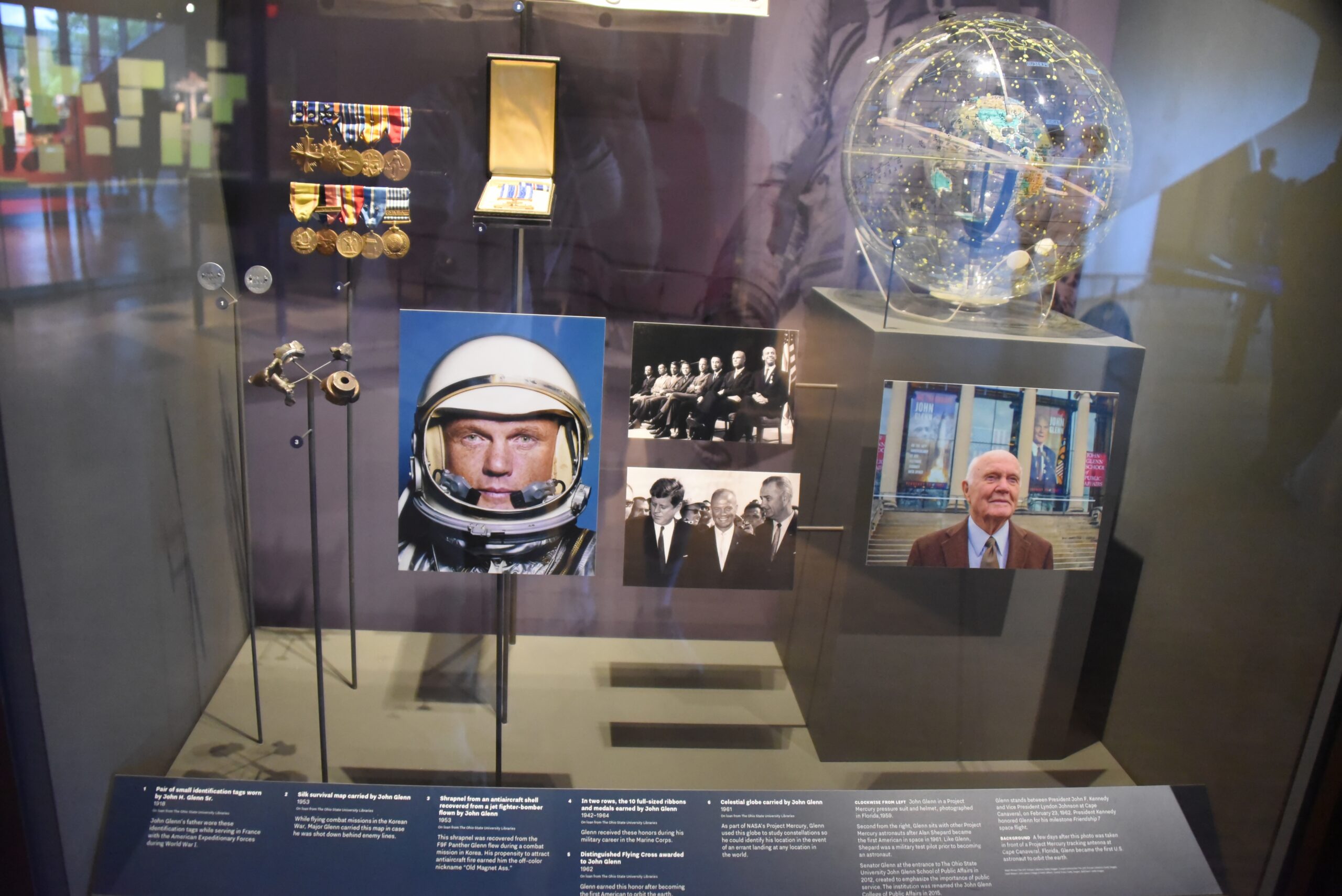





February 20, 1962, stands as a milestone in both American history and the history of human exploration. On this day, John H. Glenn Jr. became the first American to orbit Earth, a triumphant achievement that restored national confidence and marked a major victory for the United States in the early years of the Space Race.
In the tense atmosphere of the Cold War, space had become a proving ground for technological and ideological supremacy. The Soviet Union had taken early leads with Sputnik in 1957 and Yuri Gagarin’s orbital flight in April 1961. The United States responded with the Mercury program, designed to place an American astronaut into orbit and return him safely to Earth. That mission came in the form of Mercury-Atlas 6, piloted by John Glenn.
At 9:47 a.m. EST, Glenn launched from Cape Canaveral, Florida, aboard the spacecraft Friendship 7, perched atop an Atlas rocket. As the rocket roared skyward, millions of Americans watched and listened, united by a sense of anticipation and pride. Glenn’s mission was planned for three orbits around the planet, lasting just under five hours.
As Friendship 7 circled Earth, Glenn became the first American to witness multiple sunrises and sunsets from space. He reported seeing mysterious glowing particles—later identified as ice crystals—floating around his spacecraft, a phenomenon he described as “fireflies.” His calm, articulate voice during radio transmissions reassured mission controllers and the public alike.
The flight was not without danger. During the mission, a warning signal suggested that the spacecraft’s heat shield—critical for surviving reentry—might be loose. Engineers could not confirm whether the alert was real or a sensor malfunction. Rather than jettisoning the retrorocket pack as planned, controllers instructed Glenn to keep it in place, hoping it would help hold the heat shield secure. Glenn was not told the full extent of the concern until after his safe return.
Reentry was a tense and fiery ordeal. As Friendship 7 plunged through the atmosphere, Glenn felt the spacecraft shake violently and saw chunks of burning debris fly past his window. Yet the heat shield held, and at 2:43 p.m. EST, Glenn splashed down safely in the Atlantic Ocean, where he was quickly recovered by the U.S. Navy.
John Glenn’s successful mission electrified the nation. He was celebrated with a ticker-tape parade in New York City and hailed as a hero who had proven that Americans could compete—and succeed—in space. His flight paved the way for later Mercury missions, the Gemini program, and ultimately the Apollo moon landings.
February 20, 1962, was more than a technological triumph. It was a moment of unity, courage, and aspiration—when one man’s journey around Earth helped lift a nation’s eyes toward the stars and reshaped what humanity believed was possible.












What do you think?
It is nice to know your opinion. Leave a comment.