



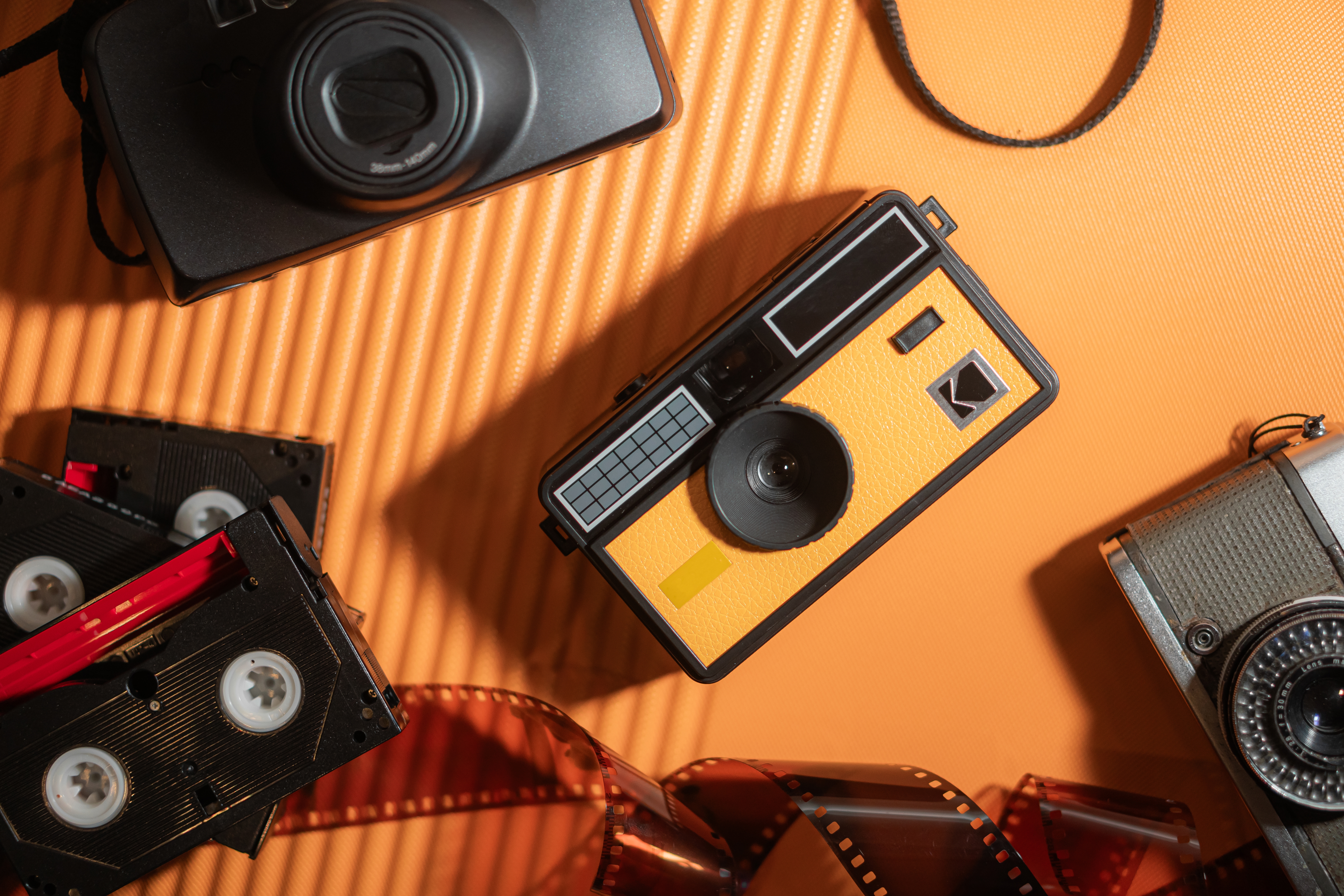





History is full of quiet revolutions—moments that didn’t make cannons roar or empires fall, yet changed everyday life forever. April 6, 1889 was one of those moments. On this day, George Eastman began selling Kodak flexible roll film, a simple invention that reshaped how humanity captured memories. In an instant, photography began its transformation from a complicated scientific craft into a joyful, everyday pastime.
A World Before Snapshots
To appreciate the magnitude of this breakthrough, imagine trying to take a photo in the 1880s. Photography wasn’t fun—it was work. Cameras were bulky wooden boxes mounted on tripods. Photographers carried heavy glass plates coated with chemicals. Taking a single picture meant:
- Preparing fragile glass plates in advance
- Carefully inserting them into the camera
- Managing exposure times that could last seconds or minutes
- Developing the image in a darkroom soon after
Photography was mostly limited to professionals, scientists, and wealthy enthusiasts. For everyday people, capturing life’s moments—birthdays, vacations, candid smiles—was nearly impossible.
The world had photography, but it did not yet have snapshots.
The Vision of Simplicity
George Eastman, a bank clerk turned inventor and entrepreneur, saw a future where photography would belong to everyone. He believed the process should be simple, portable, and affordable.
Eastman’s guiding philosophy was revolutionary: remove the technical barriers and let people focus on the joy of taking pictures.
That philosophy led to the founding of Eastman Kodak Company, a business built on innovation and user-friendly design. But the company needed one critical breakthrough to make photography truly accessible: a replacement for heavy glass plates.
Enter Flexible Roll Film
On April 6, 1889, Eastman delivered the missing piece.
Kodak introduced flexible roll film—a thin, lightweight strip of film wound on a spool. Instead of loading one fragile glass plate at a time, photographers could now take multiple pictures in succession using a roll of film inside the camera.
This may sound simple today, but in 1889 it was revolutionary.
Roll film offered major advantages:
- Portability: No more heavy boxes of glass plates
- Durability: Flexible film didn’t shatter like glass
- Convenience: Multiple exposures without reloading each shot
- Speed: Photography became faster and easier
This innovation didn’t just improve photography—it redefined who photography was for.
“You Press the Button, We Do the Rest”
Eastman didn’t stop at inventing roll film. He completely reinvented the photography experience.
Kodak cameras were sold preloaded with film. After taking pictures, customers mailed the camera back to Kodak. The company developed the photos, printed them, reloaded the camera, and shipped everything back.
Eastman’s slogan captured the magic:
“You press the button, we do the rest.”
For the first time in history, photography required no technical knowledge. No chemistry. No darkroom. No expertise. Just curiosity and a finger on a shutter button.
The Birth of Snapshot Culture
The impact of roll film was immediate and profound.
Suddenly, people could photograph:
- Family gatherings
- Vacations and travel
- Everyday life
- Children playing and growing up
Moments that had once disappeared forever could now be preserved. Photography shifted from staged portraits to spontaneous life documentation.
This was the birth of the snapshot—a casual, quick photograph capturing real life as it happened.
A Ripple Effect Across the World
Eastman’s roll film didn’t just change personal photography. It sparked innovations that shaped the modern world.
Flexible film became the foundation for:
- Motion picture film and the movie industry
- Photojournalism and documentary photography
- Scientific and medical imaging
- The entire consumer camera industry
Without roll film, the rise of Hollywood, news photography, and even modern digital imaging might have looked very different.
A Legacy That Still Lives Today
Every smartphone photo, every vacation album, every selfie owes something to that spring day in 1889. The idea that photography should be easy and accessible continues to guide technology more than a century later.
George Eastman didn’t just invent a product—he changed how humanity remembers its own story.
On April 6, 1889, photography stepped out of the laboratory and into everyday life. And from that moment forward, the world began saving its memories—one snapshot at a time.












What do you think?
It is nice to know your opinion. Leave a comment.